- Phone:8618300615001
- Email:info@yfbatt.com


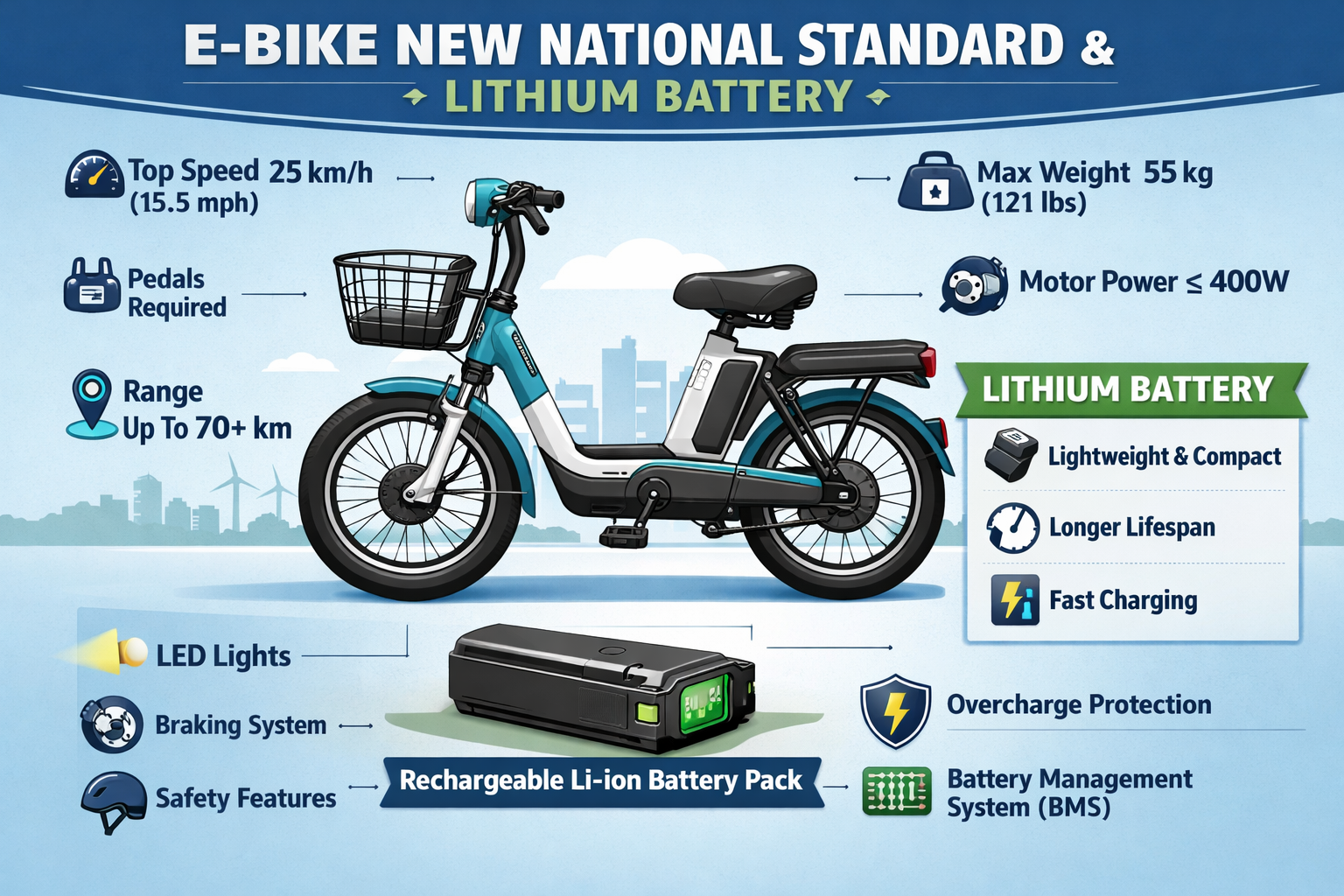
Key Changes to Battery Production Under the New Electric Vehicle National Standards
Supporting Battery Standards
Lithium-ion batteries: GB 42081-2024 (mandatory CCC certification starting November 1, 2025)
Lead-acid batteries: GB/T 22199.1-2025 (implemented May 1, 2026)
Key Changes to Battery Production
(1) Safety Testing: From “escape time” to “zero combustion & explosion”
Thermal Propagation (Core Upgrade):Old standard: No fire or explosion within 5 minutes after thermal runaway, with alarm.
New standard (GB 38031-2025):No fire or explosion for at least 2 hours after thermal runaway of a single cell;
All monitoring points ≤ 60°C, non-toxic smoke;Thermal event alarm (mandatory BMS function).
Production Impacts:Cell-level thermal barriers (aerogel, mica, ceramic insulation) required;Module/PACK with active cooling + passive insulation;
Upgraded BMS: accurate temperature monitoring, early warning, active power cutoff.
(2) Three New Severe Tests (GB 38031-2025)
Bottom impact: 30mm impact head, 150J energy, 3 consecutive impacts – no fire or explosion.
Safety after fast charging cycles: 300 fast charges (10–80% SOC) → external short circuit – no fire or explosion.
Crush, water immersion, external short circuit: stricter insulation and waterproofing.
(3) E-bike batteries (GB 42081-2024)
Must pass 6 tests: overcharge, over-discharge, short circuit, crush, nail penetration, thermal abuse.
Improved flame-retardant materials; total plastic mass ≤ 5.5% of the vehicle.