- Phone:8618300615001
- Email:info@yfbatt.com


Lithium Battery Lifecycle Management
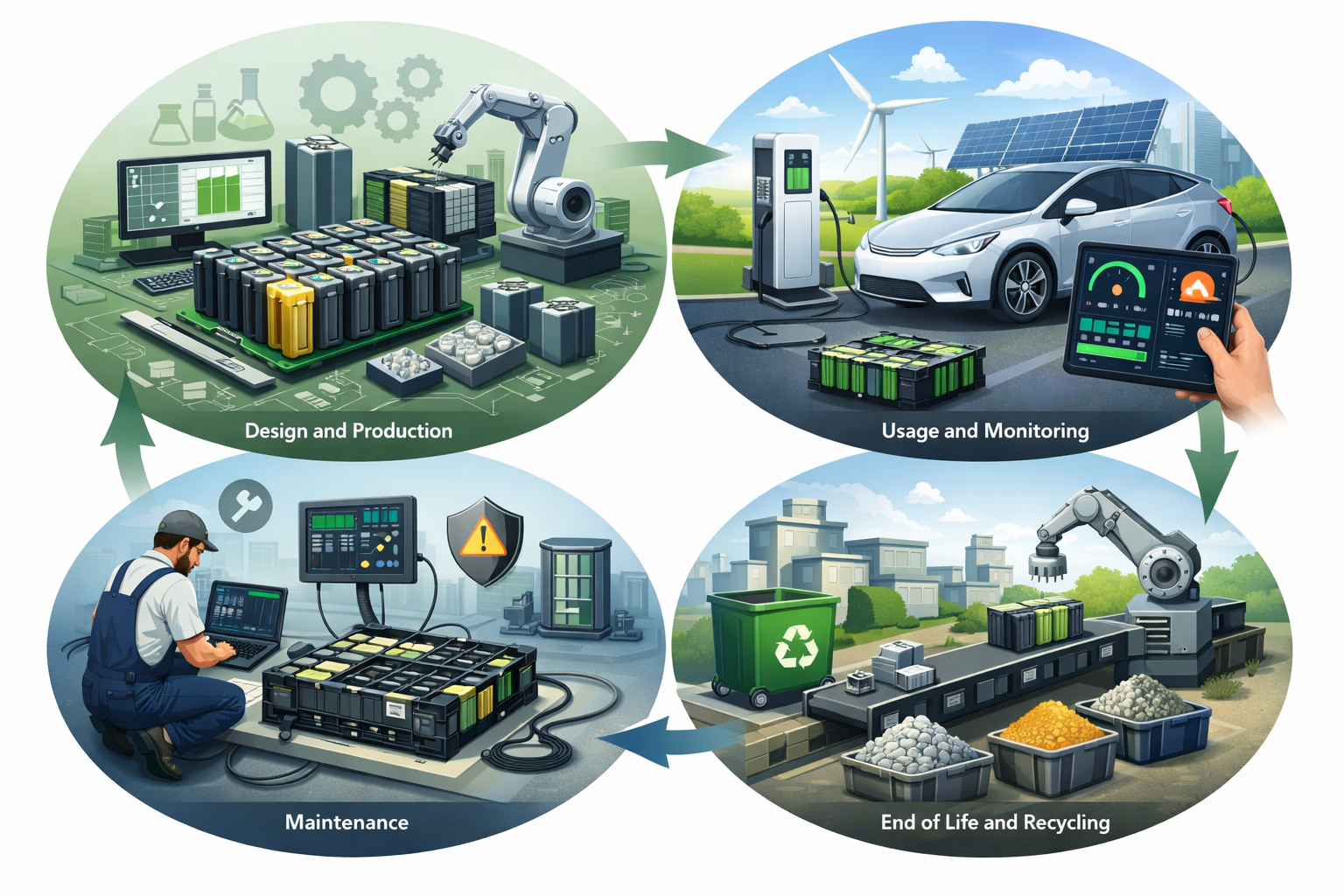
Lithium battery lifecycle management refers to the comprehensive process of monitoring, controlling, and optimizing the entire life cycle of lithium batteries—from design and manufacturing to end-of-life disposal or recycling. This approach ensures the safe and efficient operation of the battery throughout its lifespan, while also maximizing performance, sustainability, and safety.
Key stages in lithium battery lifecycle management include:
1. Design and Production:
Optimization of battery design for specific applications.
Selection of high-quality materials and components to ensure long lifespan and performance.
Incorporation of advanced Battery Management Systems (BMS) to monitor and manage battery parameters such as charge, discharge, temperature, and health.
2. Usage and Monitoring:
Continuous monitoring of battery performance, including state of charge (SOC) and state of health (SOH).
Real-time data collection to predict potential failures and optimize charging/discharging cycles.
Implementation of safety protocols to prevent overcharging, overheating, or deep discharge.
3. Maintenance:
Regular maintenance and recalibration of the Battery Management System.
Battery pack rebalancing and capacity optimization for prolonged life.
4. End of Life and Recycling:
Safe disposal or recycling of batteries when they reach the end of their usable life.
Recovery of valuable materials like lithium, cobalt, and nickel to minimize environmental impact.
